173 5502 6063

Information

Home - Information - Regulatory Information -

Summary of Prohibited and Restricted Raw Materials for Cosmetics and Their Adjustments

Summary of Prohibited and Restricted Raw Materials for Cosmetics and Their Adjustments

卡伦拜瑞 2026-05-12 54 次


<svg viewbox="0 0 1 1" style="float:left;line-height:0;width:0;vertical-align:top;" role="img" aria-label="插图"></svg>

1

Prohibited raw materials for cosmetics

1️⃣Core definition:

Prohibited raw materials for cosmetics refer to substances that cannot be used as raw materials for cosmetics. According to Article 15 of the Regulations on the Supervision and Administration of Cosmetics, the list of prohibited raw materials for cosmetics production shall be uniformly formulated and published by the drug supervision and dministration department of the State Council, and industry entities must strictly follow and implement it, strictly prohibiting illegal use.


2️⃣Annual directory updates and disabling adjustments:

The system of banned raw materials for cosmetics in China continues to be dynamically updated. Since 2021, the National Medical Products Administration has issued multiple announcements to revise the list of banned raw materials and adjust the limit standards. The key update nodes are as follows:

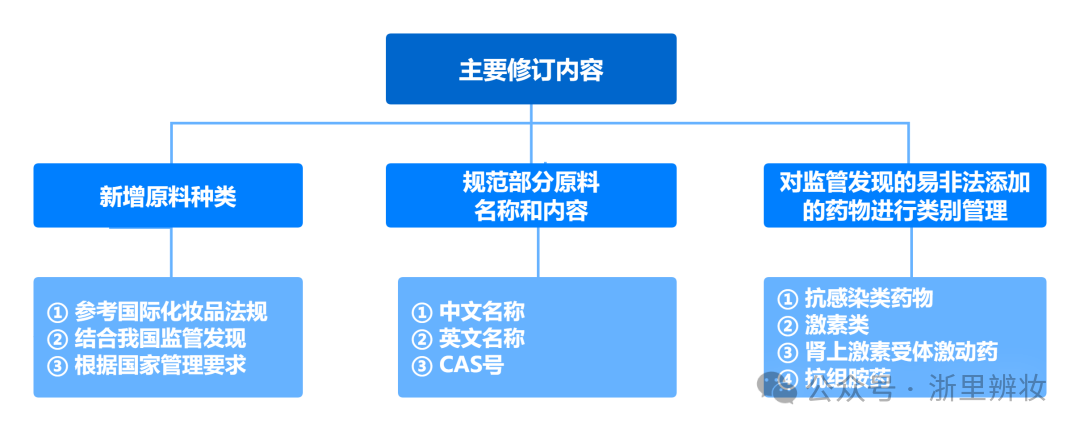
◾In 2021, the "Catalogue of Prohibited Raw Materials for Cosmetics" and "Catalogue of Prohibited Plant (Animal) Raw Materials for Cosmetics" were released, laying the foundation for the current management of prohibited raw materials. Compared with the previous ones, the main contents and characteristics of the adjustment and revision include the following three aspects:

图片

◾In 2023 (Notice No. 41), the banned raw material Benweimod (catalog number 1285) was added, and the impurity management limit standard for "benzene" was simultaneously added. The notice will be implemented immediately from the date of publication.

◾In 2024 (Notice No. 12), five new banned raw materials were added, namely bimatoprost (1286), latanoprost (1287), tafluoroprost (1288), tafluoroacetamide (1289), and trovoprost (1290), which will be officially implemented from the date of publication.

◾In 2026 (Announcement No. 6), 7 new categories of prohibited substances in cosmetics will be added, and key limit values for microorganisms and dioxane will be adjusted simultaneously. This is the most extensive regulatory update in recent years.

◾2026 (Announcement No. 48): Optimize the management rules for the prohibition of mercury and its compounds, cancel the original exemption clauses, comprehensively tighten the control of mercury substances, and officially implement on July 1, 2026.


3️⃣Details of Core Prohibition and Limit Adjustment in 2026:

Announcement No. 6 of 2026 makes significant adjustments to multiple raw material properties and product limits, covering sunscreen, hair dye, preservatives, environmental control substances, and microbiological indicators. The specific adjustment contents are as follows:
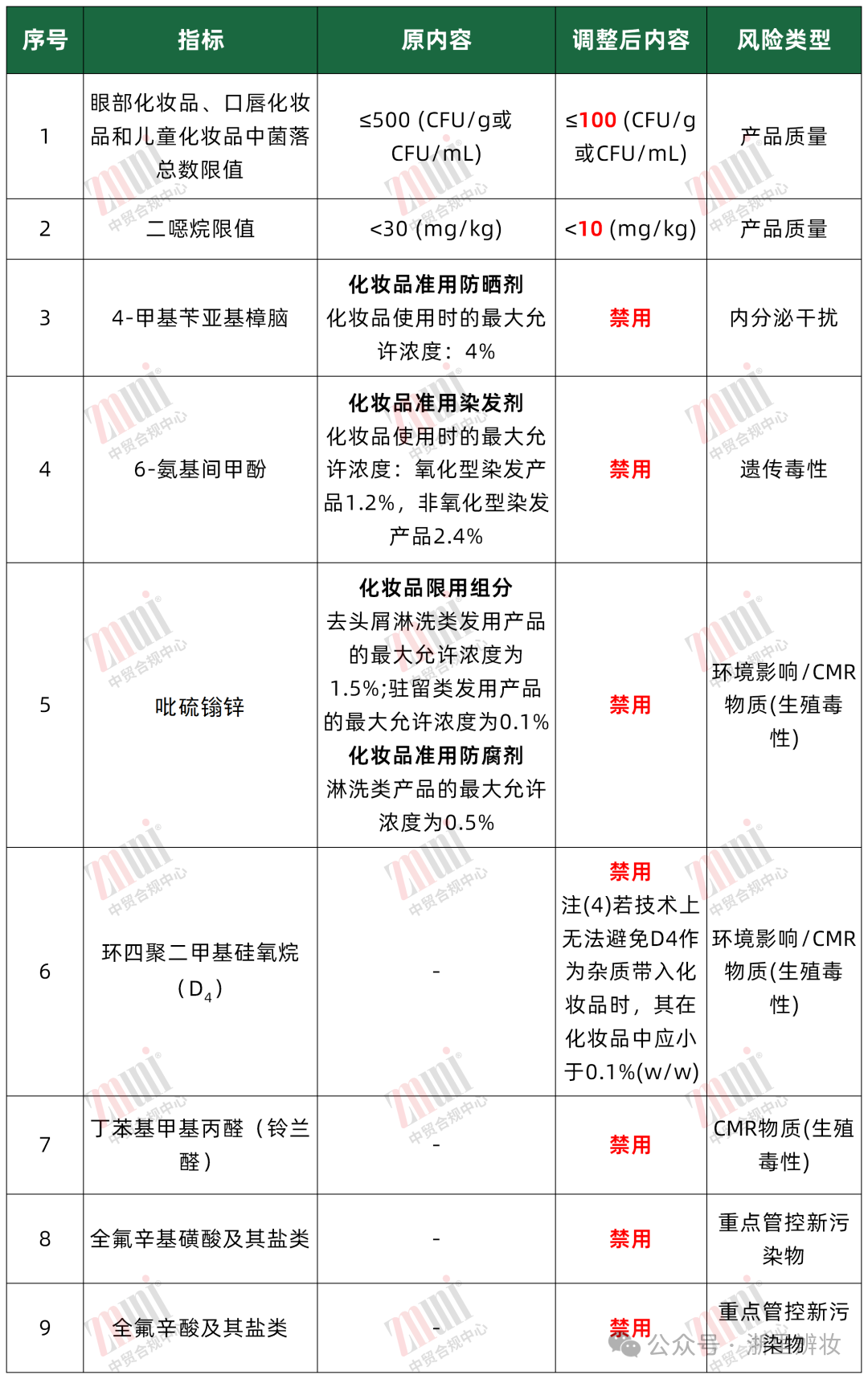
图片


4️⃣Special adjustment for mercury and its compounds in 2026:

Announcement No. 48 of 2026 comprehensively tightens the control of mercury substances, cancels the original exemption scenarios, and achieves the full category ban of mercury and its compounds. The specific adjustments are as follows:
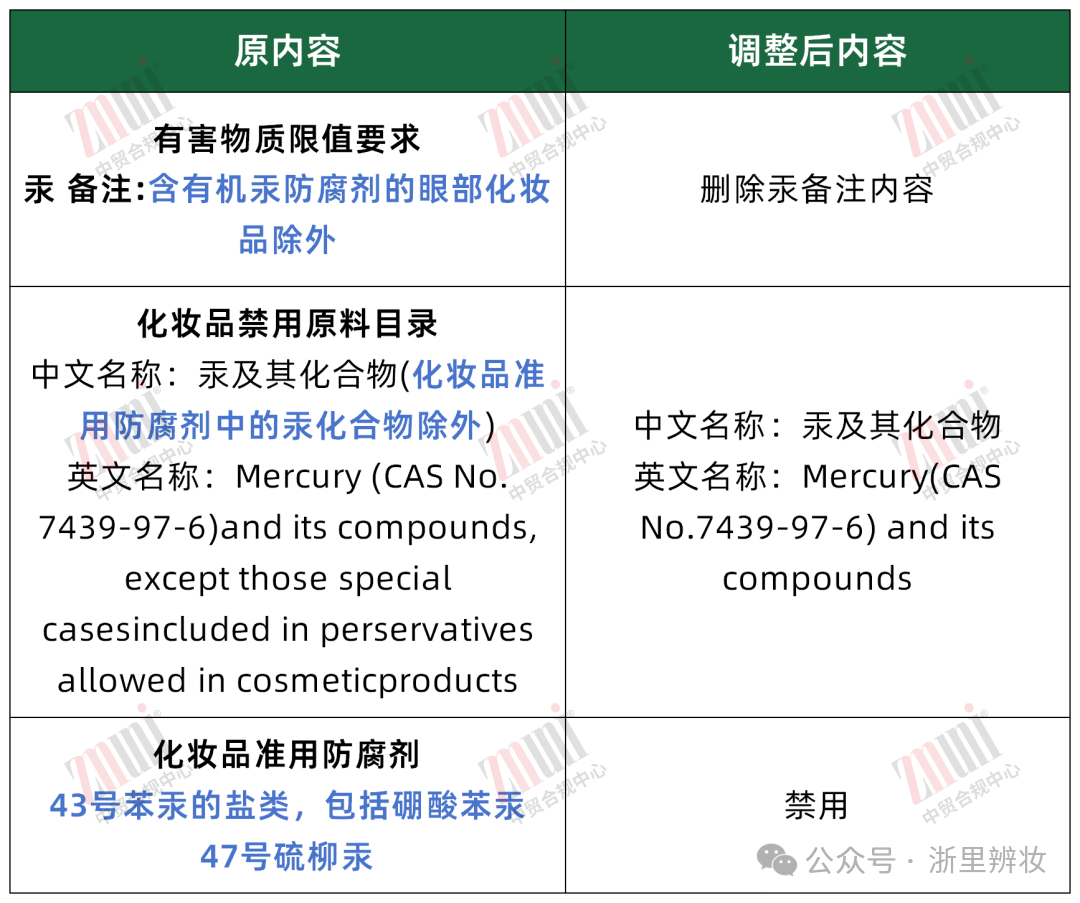
图片


5️⃣Implementing transition period rules:

◾Implementation on July 1, 2026: New regulations for the complete ban of mercury and its compounds.

◾Implemented on January 1, 2027: Control standards for total bacterial count limit, dioxane limit, 4-methylbenzylidene camphor, 6-aminocresol, perfluorooctane sulfonic acid and its salts, perfluorooctanoic acid and its salts in eye/lip/children's cosmetics.

◾Implemented on January 1, 2028: Control standards for the prohibition of butylphenylmethylpropanal, cyclotetradimethylsiloxane, and zinc pyrithione.

◾Transitional compliance: Cosmetics produced or imported before the implementation of the new regulations can be sold until the end of their shelf life; Encourage enterprises to implement new standards in advance.


6️⃣Prohibition of raw material compliance prompt:

The revised list of prohibited raw materials includes 1297 prohibited raw materials and 109 prohibited plant (animal) raw materials, totaling 1406. The core compliance points are:

◾The scope of prohibited raw materials is not limited to the substances listed in the catalog. Substances identified as having unacceptable risks after evaluation are also prohibited from use. Enterprises need to conduct a comprehensive risk assessment;

◾Natural and artificial radioactive substances shall not increase during the production process and must comply with health protection limits;

◾Impurity exemption: benzene impurity limit ≤ 2mg/kg, D4 impurity limit < 0.1% (w/w);

◾Plant (animal) raw materials, including their extracts and products, are prohibited. If there is no clear indication of prohibited parts, the entire plant is prohibited;

◾Core principles: Prohibited raw materials ≠ absolutely not detectable, impurities that cannot be avoided by technology, compliance standards for finite values, and safety risk assessments for infinite values to ensure no health hazards.

◾The determination of the banned plant animal catalog requires a dual verification mechanism, which checks both the Chinese and Latin names. As long as the Latin scientific name appears in the banned catalog, regardless of whether its Chinese name is consistent, the raw material is banned.

◾Pay attention to distinguishing between "hazardous substances" and "illegal additions": the former is not actively added, but refers to impurities or by-products (such as dioxane, benzene) that are passively generated, introduced, or migrated during raw materials, packaging materials, production, storage, and transportation processes; The latter intentionally and proactively adds ingredients that are explicitly prohibited by the state, such as hormones and antibiotics.

◾Risk substance control: Identify risk substances based on their sources and production processes, refine classification, standardize assessment, and improve technical guidance to prevent and control risks.


<svg viewbox="0 0 1 1" style="float:left;line-height:0;width:0;vertical-align:top;" role="img" aria-label="插图"></svg>

2

Cosmetics restricted raw materials

1️⃣Core definition:

化妆品限用原料指在限定条件下,可作为化妆品原料使用的物质。需严格遵守目录规定的限值、适用产品品类及标签标注要求。


2️⃣Overview of directory iteration:

There were originally a total of 47 types, which were revised through multiple rounds of new regulations. Announcement No. 74 of 2021 banned dichloromethane, nitromethane, formaldehyde, boric acid, borate salts, and tetraborate salts; Announcement No. 6 of 2026 prohibits the use of zinc pyrithione and adjusts the control standards for salicylic acid. Currently, there are a total of 42 effective restricted raw materials.


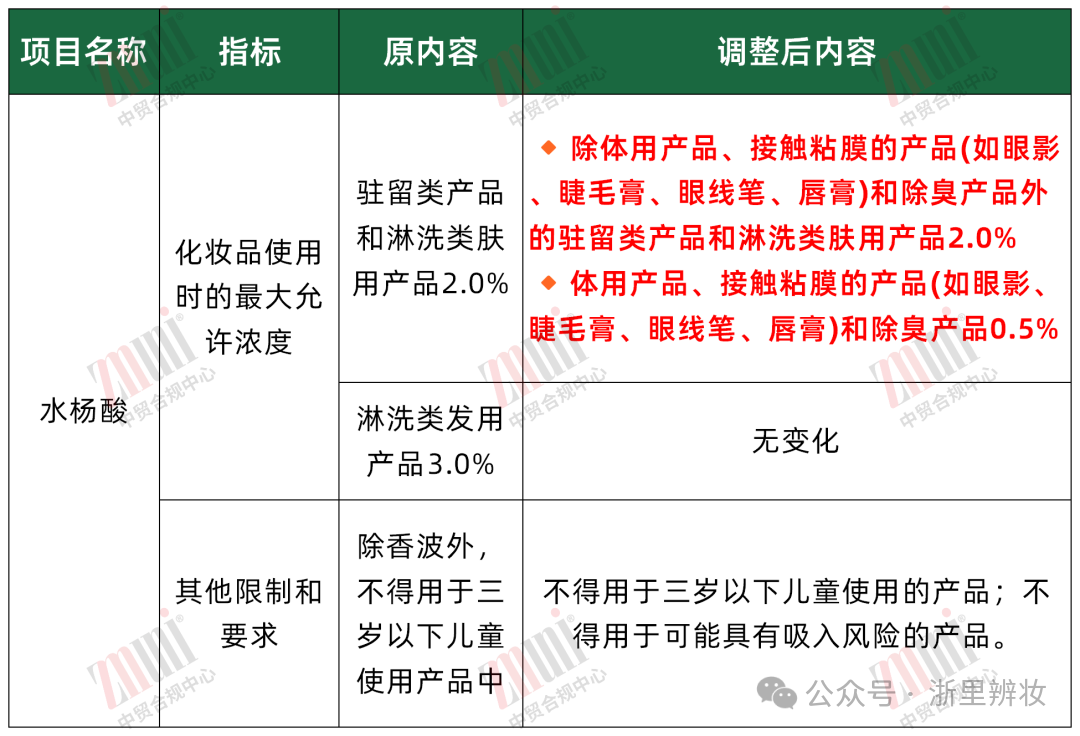
3️⃣Core raw material adjustment details (salicylic acid):

Salicylic acid, as a restricted raw material that is frequently used, will undergo significant refinement in its usage scenarios and concentration limits under new regulations in 2026. Differentiated control will be implemented for different product categories, with specific adjustments as follows:
图片


4️⃣Implementing transition period rules:

◾Implementation time: officially implemented from January 1, 2028, with a transition period of 2 years.

◾Transition period rules: Products produced or imported before the implementation of the new regulations can be sold until the end of their shelf life, and companies are encouraged to upgrade their compliance in advance.

◾Core control requirements: Strictly distinguish product usage scenarios, accurately control concentration limits, and implement the prohibition requirements for children's products and inhalation risk products.


5️⃣Compliance reminder for restricted raw materials:

◾When restricted substances are not used as preservatives, the product label must also indicate the name of the raw material and its specific function.

◾Only when products containing salicylic acid may be used by children under three years old and have long-term contact with the skin, should a corresponding warning label be added on the label - 'Do not use for children under three years old'.

◾When the concentration of formaldehyde exceeds 0.05%, it should be marked as' containing formaldehyde '.

◾There should be a correct understanding and application of "limiting conditions", such as silver nitrate being only allowed to be used for products that dye eyelashes and eyebrows. Not to be used for hair dye products such as "one wash black" or "white to black" shampoos.


<svg viewbox="0 0 1 1" style="float:left;line-height:0;width:0;vertical-align:top;" role="img" aria-label="插图"></svg>

3

Approved raw materials for cosmetics

The approved raw materials for cosmetics are functional materials that can be used in cosmetics under the premise of compliance, including four categories: approved preservatives, approved sunscreens, approved colorants, and approved hair dyes. Each category has clear concentration limits, usage ranges, impurity control, and labeling requirements. In recent years, the control standards for many types of raw materials have been significantly tightened.

<svg viewbox="0 0 1 1" style="float:left;line-height:0;width:0;vertical-align:top;" role="img" aria-label="插图"></svg>

Approved preservatives:

1️⃣Definition and Catalog Overview:

◾Definition: Refers to substances added to cosmetics with the purpose of inhibiting the growth of microorganisms in cosmetics.

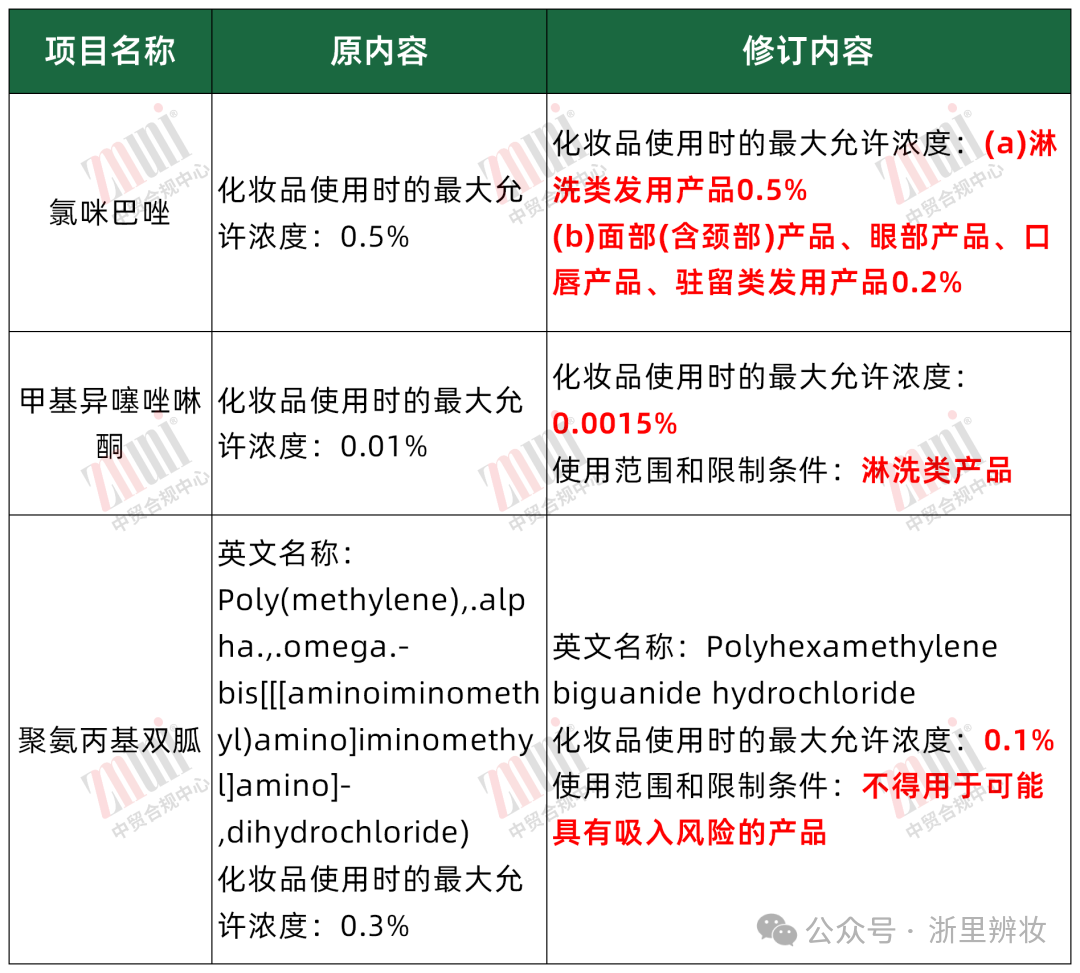
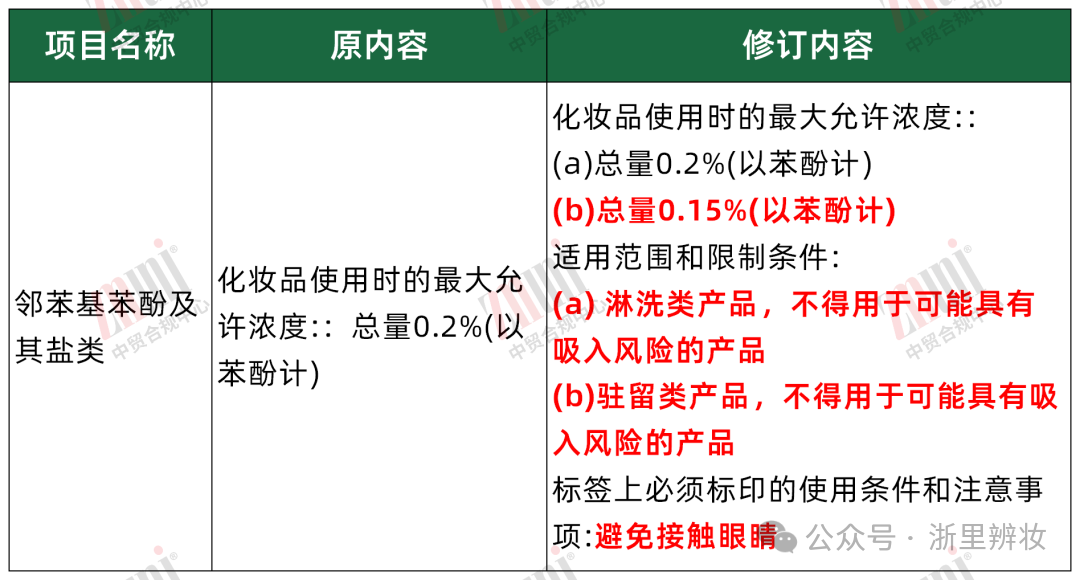
◾Catalog Overview: Originally, there were 51 types. The National Medical Products Administration banned benzyl chlorophenol, formaldehyde, and polyformaldehyde in Announcement No. 74 of 2021, added ethyl lauroyl arginine hydrochloride in Announcement No. 141 of 2020, banned zinc bisulfide in Announcement No. 6 of 2026, adjusted the management requirements for the use of clotrimazole, methyl isothiazolinone, and poly (aminopropylbiguanide), and banned the salts of phenylmercury in Announcement No. 48 of 2026, including phenylmercury borate and thimerosal. There are currently a total of 47 effective and approved preservatives.

2️⃣Core adjustment content for 2026:

The new regulations for 2026 will tighten the concentration limits and limit the use scenarios of multiple commonly used preservatives. The specific adjustments are as follows:

◾Announcement No. 6 of 2026:
图片

注:过渡期2年,自2028年1月1日起实施,过渡期内旧产品可售至保质期结束。

◾Announcement No. 6 of 2026:
图片

Note: The transition period is 2 years, which will be implemented from June 1, 2028. During the transition period, old products can be sold until the end of their shelf life.

3️⃣Compliance tips for approved preservatives:

Formaldehyde Release and Free Formaldehyde Control:
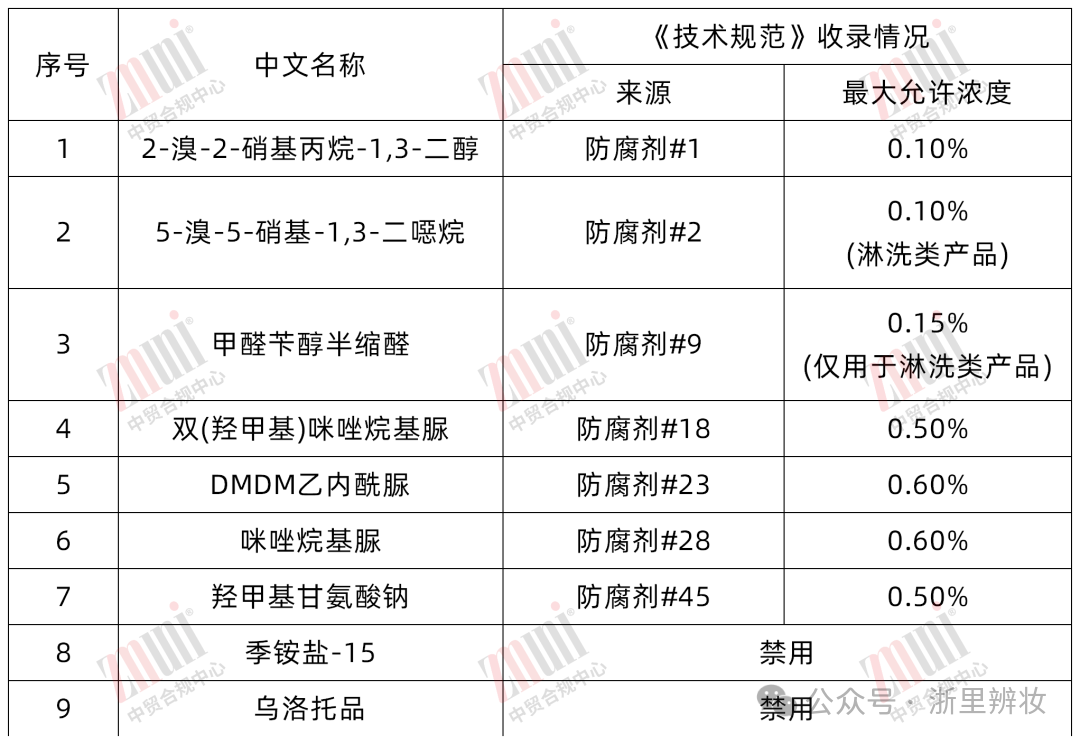
图片

注:①当成品中甲醛浓度超过0.05%(以游离甲醛计)时,都必须在产品标签上标印“含甲醛”,且禁用于喷雾产品。

②0.05%为标签触发阈值,非原料限值。

<svg viewbox="0 0 1 1" style="float:left;line-height:0;width:0;vertical-align:top;" role="img" aria-label="插图"></svg>

Approved sunscreen:

1️⃣Definition and Catalog Overview:

◾Definition: A substance added to cosmetics that utilizes the absorption, reflection, or scattering of light to protect the skin from specific UV damage or to protect the product itself.

◾Catalog Overview: There were originally a total of 27 types. The National Medical Products Administration banned 3-benzylidene camphor in Announcement No. 74 of 2021, banned 4-methylbenzylidene camphor in Announcement No. 6 of 2026, adjusted the management requirements for the use of benzophenone-3, humoloyl ester, and Eucalyptol, and currently approved a total of 25 effective sunscreen agents.

2️⃣Core adjustment content for 2026:
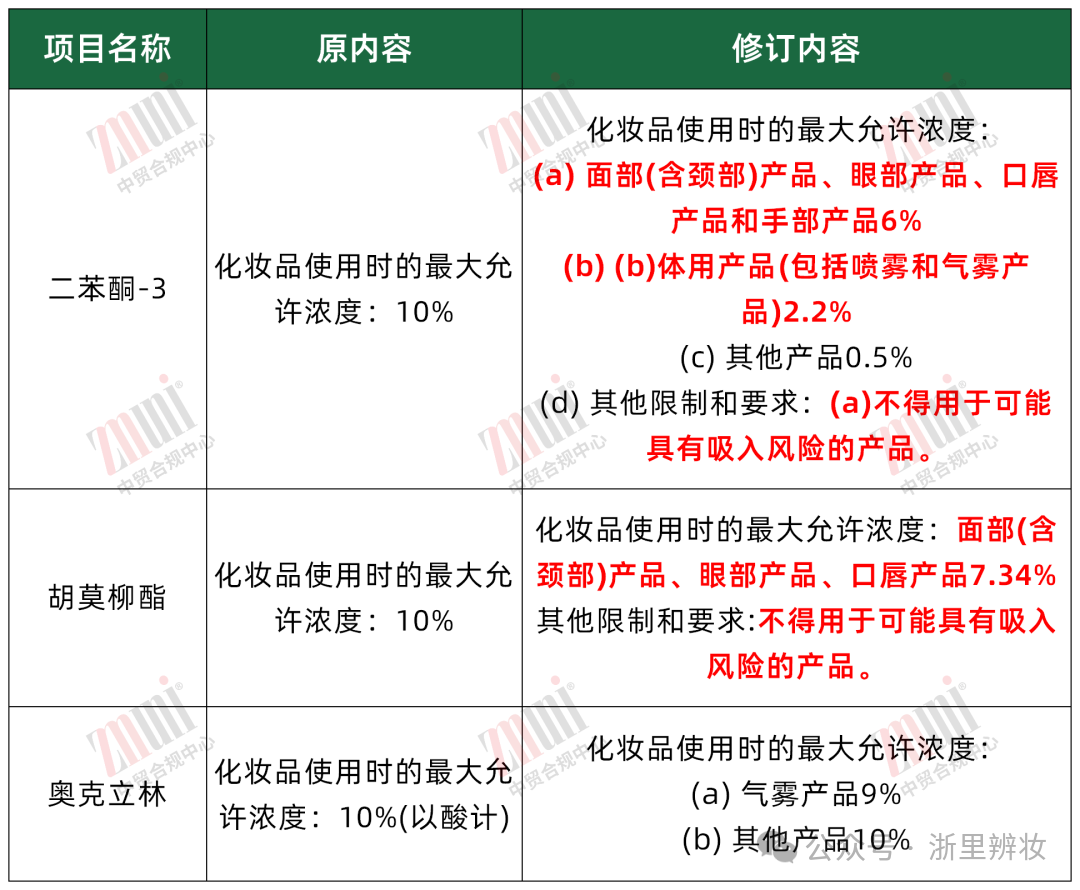
图片

Note: The transition period is 2 years, which will be implemented from January 1, 2028. During the transition period, old products can be sold until the end of their shelf life.

<svg viewbox="0 0 1 1" style="float:left;line-height:0;width:0;vertical-align:top;" role="img" aria-label="插图"></svg>

Approved coloring agents:

1️⃣Definition and Catalog Overview:

◾Definition: A substance added to a cosmetic product or its application site to give it a color by absorbing or reflecting visible light, but does not include hair dyes as specified in Table 7 of Chapter 3.

◾Catalog Overview: The current catalog contains a total of 157 types.

2️⃣Compliance tips for approved coloring agents:

◾Approved colorants in the list, salts and lakes generated by reacting with non prohibited substances, are also allowed to be used in cosmetics.

◾Insoluble barium, strontium, zirconium lakes, and salts must undergo insolubility testing before they can be used;

◾Colorants that have both sun protection and sunscreen functions must also comply with sunscreen control standards.


<svg viewbox="0 0 1 1" style="float:left;line-height:0;width:0;vertical-align:top;" role="img" aria-label="插图"></svg>

Approved hair dye:

1️⃣Definition and Catalog Overview:

◾Definition: A substance added to cosmetics to change hair color.

◾Catalog Overview: Originally, there were a total of 75 types. The National Medical Products Administration's Announcement No. 74 of 2021 banned 2-chloro-phenylenediamine and 2-chloro-phenylenediamine sulfate. In 2026, 6-aminocresol was banned, and the management requirements for the use of toluene-2,5-diamine and its sulfate, as well as Acid Violet No. 43, were adjusted. Currently, there are a total of 72 effective types.


2️⃣Core adjustment content for 2026:
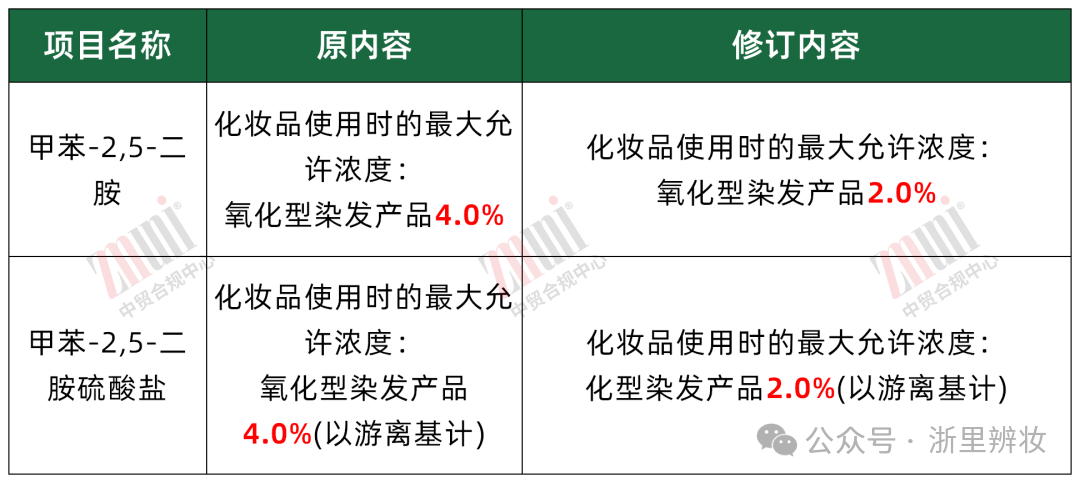
图片

Note: The transition period is 2 years, which will be implemented from January 1, 2028. During the transition period, old products can be sold until the end of their shelf life.
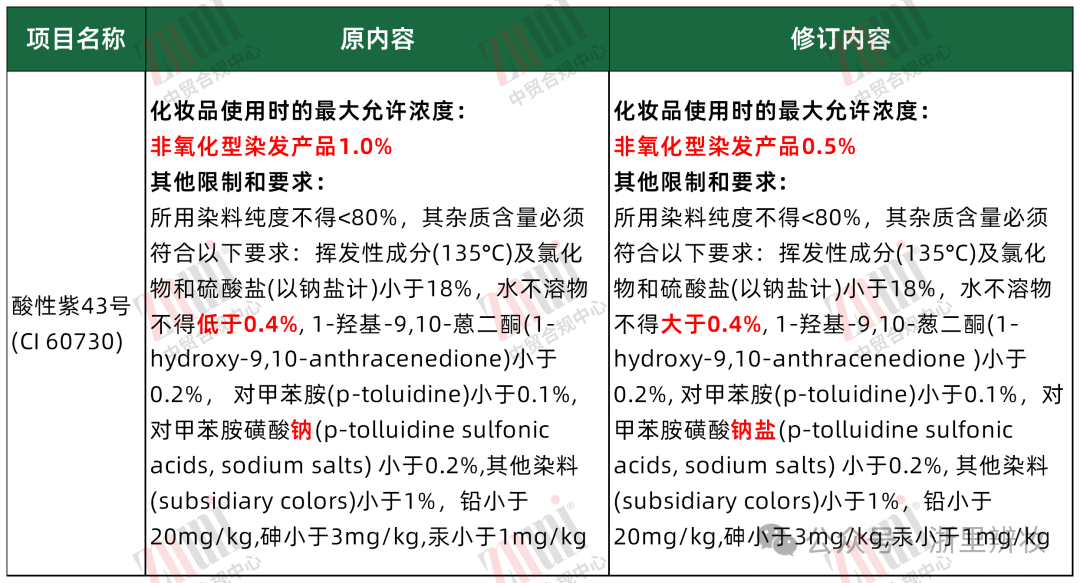

图片

Note: The transition period is 2 years, which will be implemented from June 1, 2028. During the transition period, old products can be sold until the end of their shelf life.


3️⃣Compliance tips for approved hair dye:

◾All hair dye products must be mandatory to label with unified warning signs, strictly control the user population, applicable parts, and mixing ratios. Hair dye may cause serious allergic reactions and should not be used to dye eyebrows and eyelashes. If it accidentally gets into the eyes, it should be rinsed immediately.

◾When used in conjunction with oxidized milk, the mixing ratio should be clearly indicated.


<svg viewbox="0 0 1 1" style="float:left;line-height:0;width:0;vertical-align:top;" role="img" aria-label="插图"></svg>

4

In conclusion

In 2026, as a period of intensive regulatory updates, enterprises should pay special attention to the two key implementation milestones of new regulations in 2027 and 2028 when developing formulas and filing products, to ensure compliance throughout the product lifecycle.

Content source: Summary from "2026 1st 'Makeup Evaluation Cloud Classroom' Public Welfare Training"

[Website description] This article is from the Internet for the purpose of learning and exchange. If there are copyright, goodwill and other issues involved, please call:173 5502 6063 Please be informed that we will promptly delete and handle it. This website does not assume any disputes or legal responsibilities!
  • Prev

    No more.

  • Next

    Yuganzi extract

    • Technical Consulting

    • Customer Service Inquiry

    Service hotline

    173 5502 6063

    address:Building 3, High tech Entrepreneurship Service Center, No. 82 Huayuan West Road, Chuzhou City, Anhui Province

    mailbox:sales@ffingredients.cn

    Top
    Sample Request
    If you have any needs or questions, please fill out the following form and we will provide feedback within 1 working day!